

By Wei-Ting Chen, Hui-An Ho
In 2025, Taiwan’s political landscape remained turbulent. The country faced an unprecedented nationwide recall campaign targeting legislators, a referendum on restarting the Third Nuclear Power Plant, and a series of major domestic and international events.
Behind every heated policy debate and every viral post lay public demand for information—along with deep anxiety. In Taiwan’s highly complex and contested information environment, Taiwan FactCheck Center (TFC) continued to approach these challenges through rigorous fact-checking.
Throughout 2025, TFC’s fact-checking team produced more than 540 fact-checks, along with 85 in-depth, explanatory articles and weekly rumor observatories. We also published over 200 Instagram infographics and experimented with new ways of engaging audiences across different platforms. This year marked our first large-scale effort to produce both long-form and short-form videos, allowing fact-checking to reach people scrolling through their phones.
Among the 46 videos released, several stood out: the rumor claiming a “devastating July earthquake in Japan” surpassed one million views.
We continue accompanying readers as they navigate the vast and often confusing online information space in search of reliable facts. As 2026 begins, we look back at some of the defining moments of the past year.
January: Budget Battles and Political Showdowns
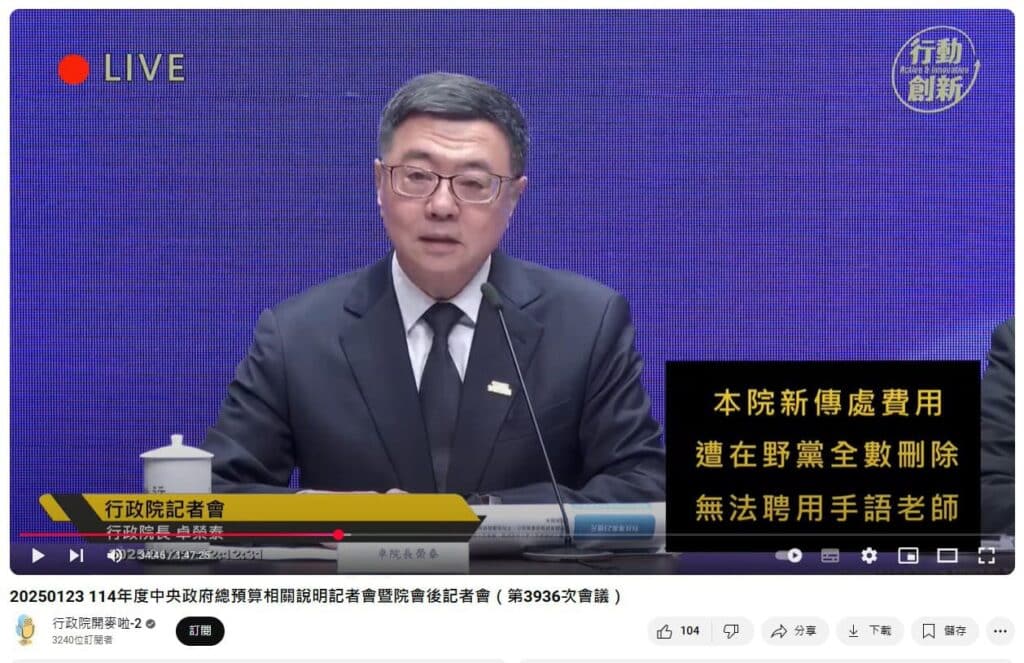
In January, Taiwan’s Legislative Yuan passed the 2025 central government budget, cutting approximately NT$207.5 billion, reducing total annual expenditures from over NT$3 trillion to just under NT$2.9 trillion—the largest budget cut in Taiwan’s history.
The scope of the cuts affected multiple ministries and government functions, sparking fierce exchanges between legislators and the executive branch. Public debate quickly followed, with widespread claims that the reductions would directly harm citizens’ rights and everyday services.
TFC compiled and examined these controversies, clarifying the key areas of budget contention. We found that political actors on all sides selectively emphasized figures that favored their narratives, amplifying confusion and making it harder for the public to grasp the full picture.
Navigating Numbers: Fact-Checking Disinformation on Taiwan’s Budget Cuts
February: A Celebrity Death and a Wave of Influenza Rumors
In February, the passing of well-known Taiwanese celebrity Barbie Hsu from influenza-related pneumonia triggered a surge of online rumors about the flu virus, vaccines, and pandemic preparedness budgets. Public anxiety led to a rush for flu vaccinations, prompting Taiwan’s Centers for Disease Control to procure additional vaccine doses. The issue ultimately ranked as the top vaccine-related news story of the year.
One widely shared claim alleged that “soaking in hot springs while infected with influenza accelerates viral damage to internal organs.” After consulting public health and infectious disease experts, TFC found that while hot springs are not recommended for people experiencing severe flu symptoms—due to added physical strain—the claim that bathing would cause the virus to destroy organs throughout the body was a clear exaggeration with no scientific basis.
March: The President’s Announcement on Restoring Military Trials
In March, President Lai Ching-te announced plans to restore Taiwan’s military trial system, igniting widespread public debate. Almost immediately, social media platforms were flooded with misleading claims and alarmist narratives—suggesting that restoring military trials meant a return to martial law, or that war was imminent.
False claims also circulated alleging “mandatory conscription for all citizens” or that “soldiers could be sentenced to more than seven years in prison for stealing breakfast.” In response, TFC published multiple fact-checks and an in-depth explanatory article, unpacking expert interpretations of what restoring military trials would—and would not—mean in practice.
Shadows of Doubt: Disinformation Fueling National Security Anxiety (February–April 2025)

April: Organ Donation Rumors and Misrepresentation of Taiwan’s Medical System
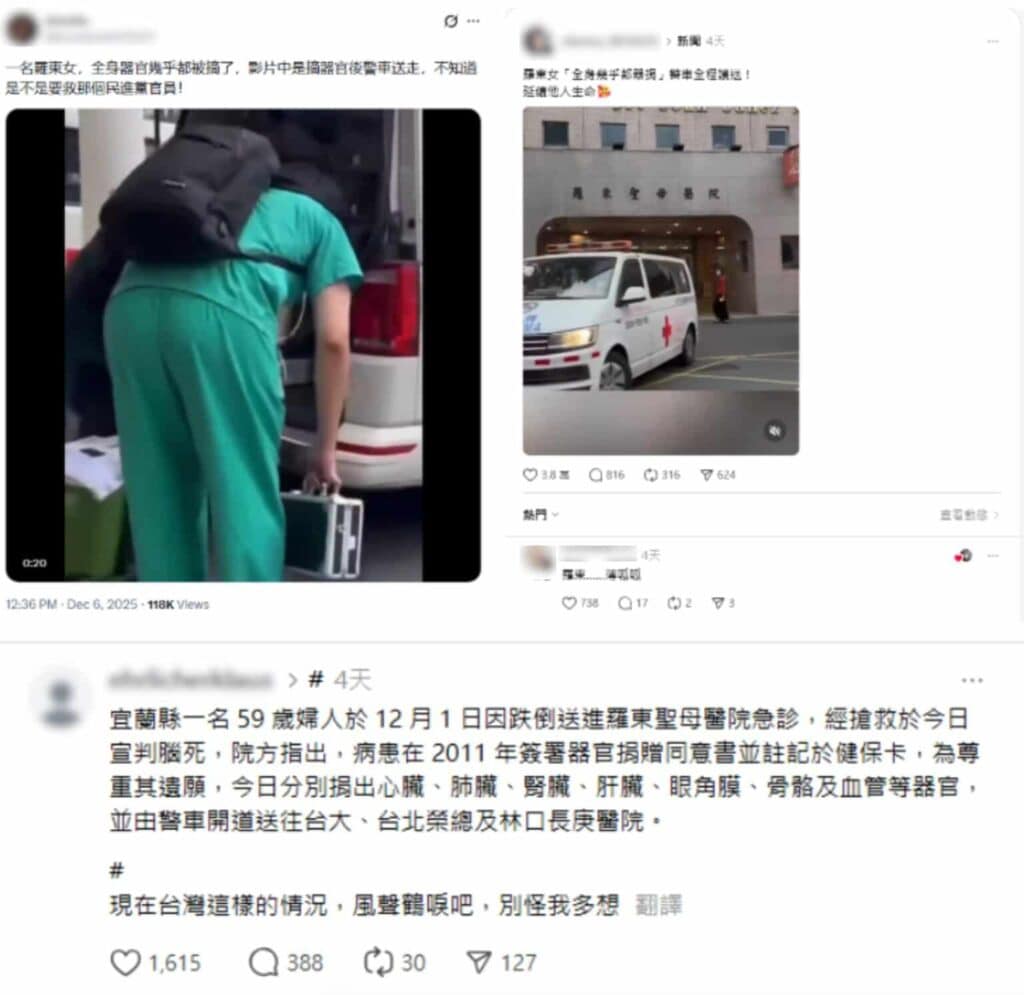
In April, social media platforms saw a surge of rumors involving alleged organ transplants in China, including claims about infant kidney transplants and a so-called “brainstem impact device.” Amid this wave, Lotung Poh-Ai Hospital in Yilan became the target of coordinated attacks, fueled by its familial connection to Bo Guagua, the son of former Chinese official Bo Xilai.
False claims insinuated that the hospital was involved in China’s organ transplant system, implying that organs donated through Taiwan’s donation system could be misused. These narratives not only damaged Taiwan’s medical reputation but also stigmatized organ donation itself.
TFC published fact-checks in April, but similar claims resurfaced repeatedly throughout 2025, reappearing again in December following a separate organ donation case in Lotung.
Organ donation experts emphasized that Taiwan’s transplant system operates under strict legal frameworks and centralized matching mechanisms, leaving no room for “black box” manipulation. Conspiracy theories involving “forced organ harvesting,” “declared-dead donations,” or “coerced donation” have no basis in Taiwan’s medical reality.
May: U.S. Reciprocal Tariffs Spark Online Speculation in Taiwan
In April, U.S. President Donald Trump announced reciprocal tariff measures, sending shockwaves through global markets. Taiwan’s online spaces quickly filled with speculation and misinformation. Some Taiwanese media outlets falsely claimed that Trump had stated the exchange rate between the New Taiwan dollar and the U.S. dollar should be 13.3:1—a statement he never made. Other misleading graphics impersonated President Lai Ching-te, falsely announcing the outcome of Taiwan–U.S. tariff negotiations.
Recommended reading: Trump did not say the exchange rate should be 13.3:1
June: Israel–Iran Military Conflict and Misleading War Footage
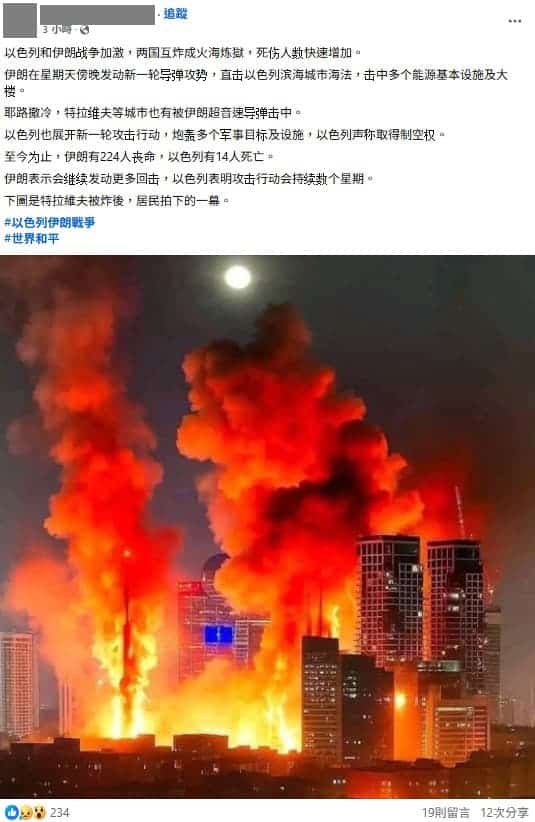
On June 13, Israel launched airstrikes on Iran’s Tehran Province, triggering military clashes between the two countries. Taiwanese social media users widely shared images and videos of the conflict—but misinformation quickly spread alongside authentic footage.
Some clips were AI-generated, while others repurposed scenes from video games or unrelated conflicts, misleading viewers about the scale and nature of the fighting. TFC worked to identify and contextualize these visuals, reminding audiences to remain cautious when consuming wartime imagery online.
July: Doomsday Rumors Trigger Anxiety Over Earthquake “Prediction”
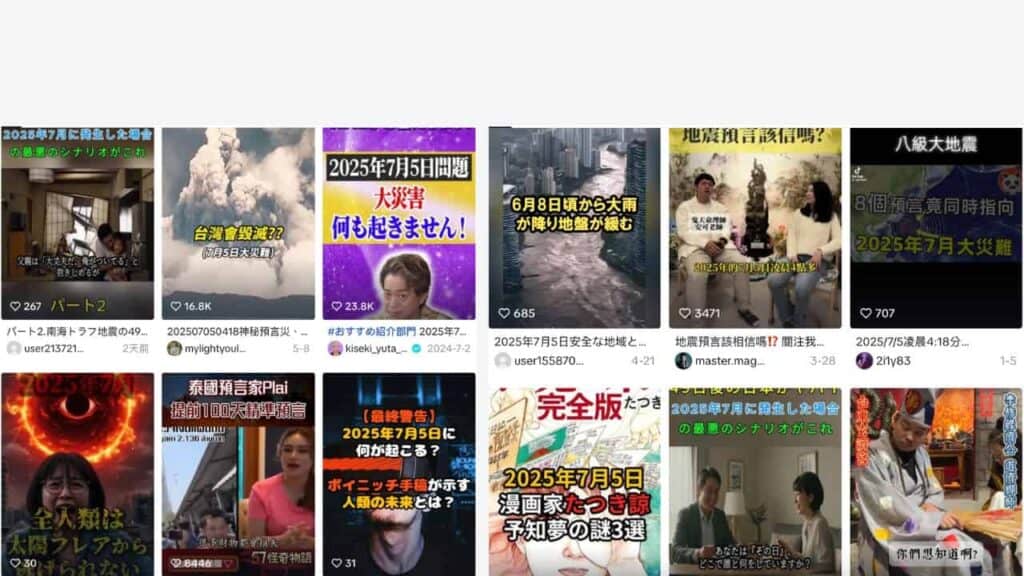
In 2021, Japanese manga artist Ryo Tatsuki published The Future I Saw, which included a prediction that a major disaster would occur on July 5, 2025. As the date approached, a wave of anxiety spread across Taiwanese and Hong Kong social media, particularly on platforms like Threads and TikTok. Viral posts claimed Japan would “sink into the ocean,” that a line would connect Japan and Hong Kong in destruction, and that the disaster would affect the Philippines, Taiwan, and Hong Kong.
According to NHK, these online rumors even led to a drop in Japanese tourism among Hong Kong travelers. While these doomsday predictions fed off widespread uncertainty, they also exposed the challenges of science communication. We interviewed several experts who emphasized that earthquakes cannot be predicted with precision—only probabilistic forecasts can be made through fault zone analysis and early warning systems.
July–August: Unprecedented Recall Vote & Nuclear Referendum Drive Misinformation
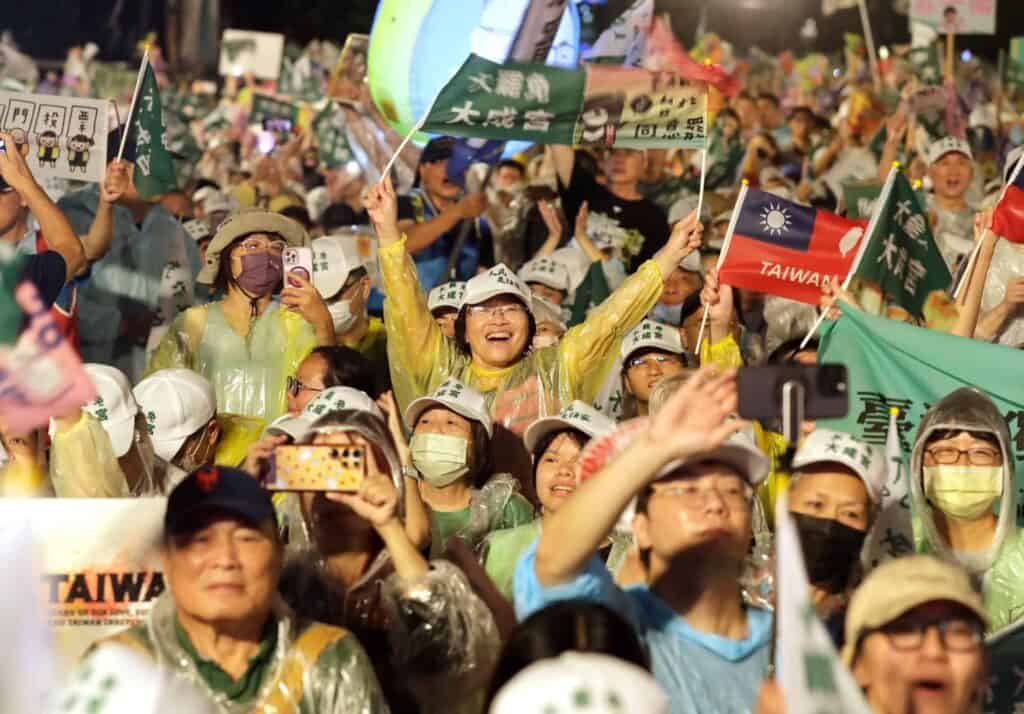
Another major development came in July and August: Taiwan held a recall vote targeting 26 KMT legislators and Hsinchu Mayor, marking the first nationwide legislator recall in history.
This rare political event gave rise to both familiar and new types of misinformation. Most of the falsehoods centered around voting procedures, with attempts to manipulate turnout by encouraging or discouraging voting. Many rumors reflected the public’s unease with the unprecedented nature of the recall rather than malicious intent.
An Analysis of False Information Surrounding the Taiwanese “Great Recall” Vote
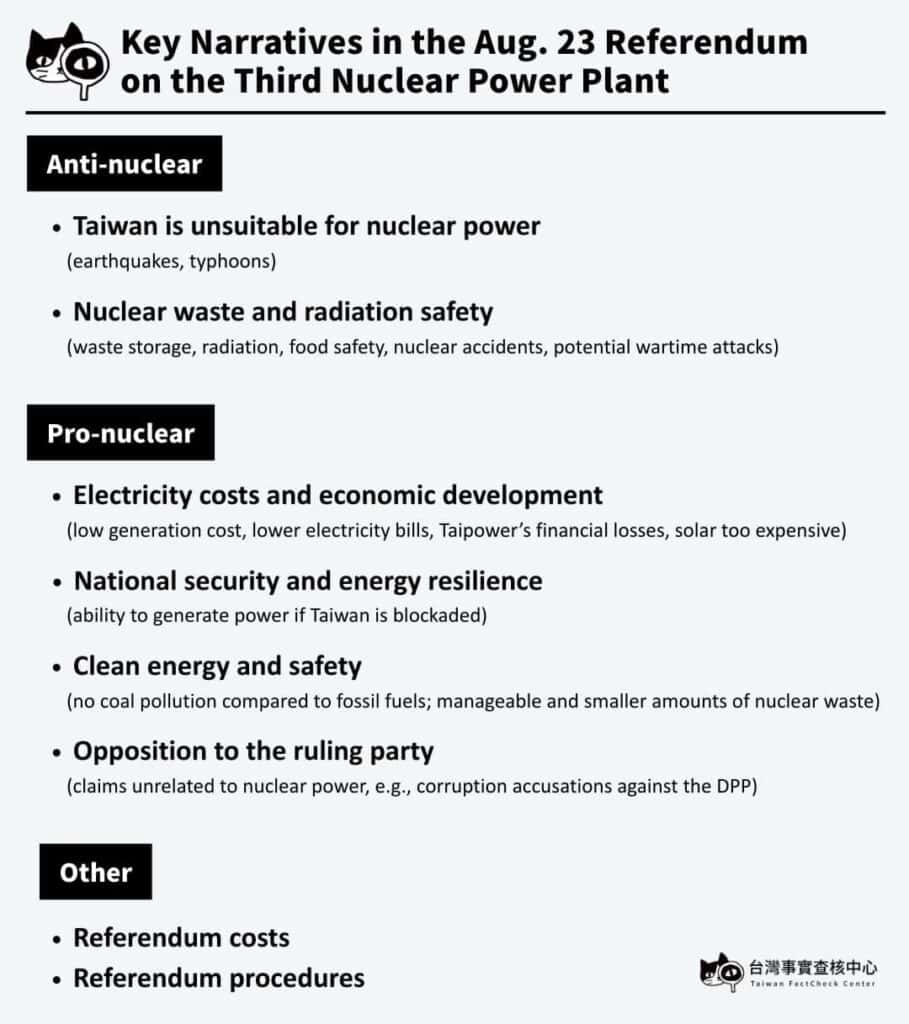
On August 23, Taiwan held a national referendum on whether to restart the Third Nuclear Power Plant (NPP-3). Just weeks prior, a typhoon had damaged offshore solar farms in southern Taiwan, sparking a flurry of disinformation. Viral clips falsely claimed toxic water leaks, mass fish deaths, and even a bird dying after drinking water near solar panels—one of the most circulated videos was AI-generated. Taiwan’s Ministry of Environment publicly debunked these claims.
To help the public navigate these complex debates, TFC compiled answers to eight key questions raised online, ranging from the legal power of the referendum and the safety of NPP-3’s operations, to concerns about radioactive waste storage, Hengchun fault lines, wartime electricity demands, and post-Fukushima health risks.
September: Devastating Landslide Dam Breach in Hualien Fuels Polarized Narratives
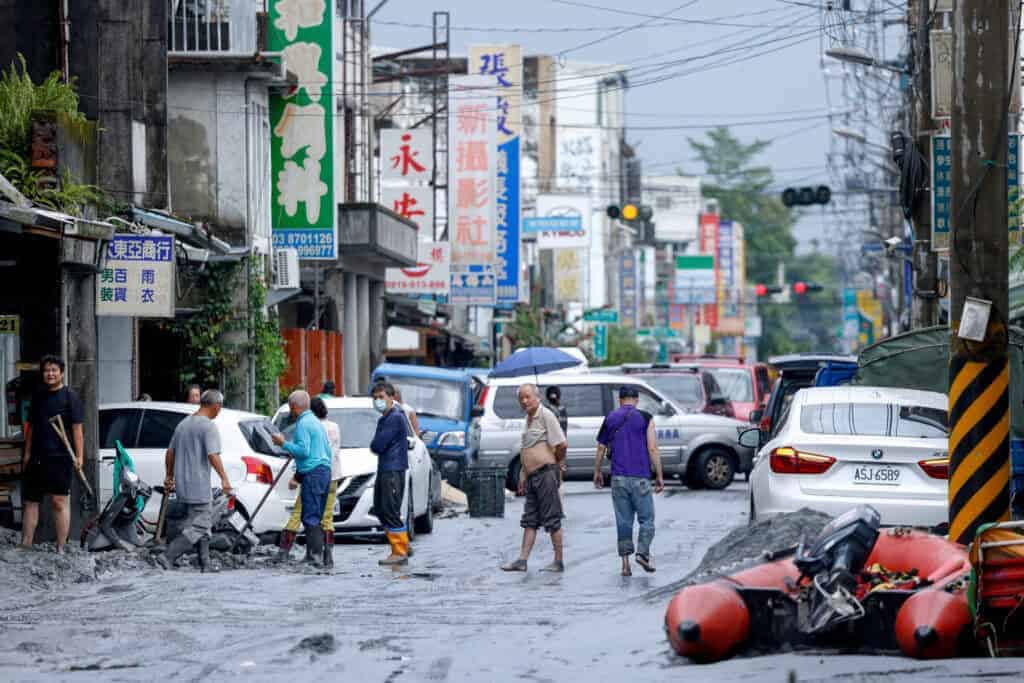
In late September, Super Typhoon Higos struck Taiwan’s east coast, triggering the overflow and collapse of the landslide dam on the Mataian Creek in Hualien. The resulting floods devastated Guangfu Township downstream, causing immense damage and heartbreak.
As Taiwan’s political climate remains highly polarized, the disaster quickly became a flashpoint. The central and county governments belong to opposing parties, leading to rapid politicization of relief efforts and widespread online debate. Disinformation—ranging from rescue-related rumors to politically charged blame narratives—spread rapidly through partisan networks, further deepening social division and public distrust.
In response, TFC published seven fact-checks and two in-depth explainers, launched a dedicated information hub with multimedia formats (including podcasts and short videos), and aimed to make reliable information more accessible to the public during crisis moments.
Rumors Amid the Rubble: Misinformation and Politics After the Mataian Flood
October: First Case of African Swine Fever Confirmed in Taiwan
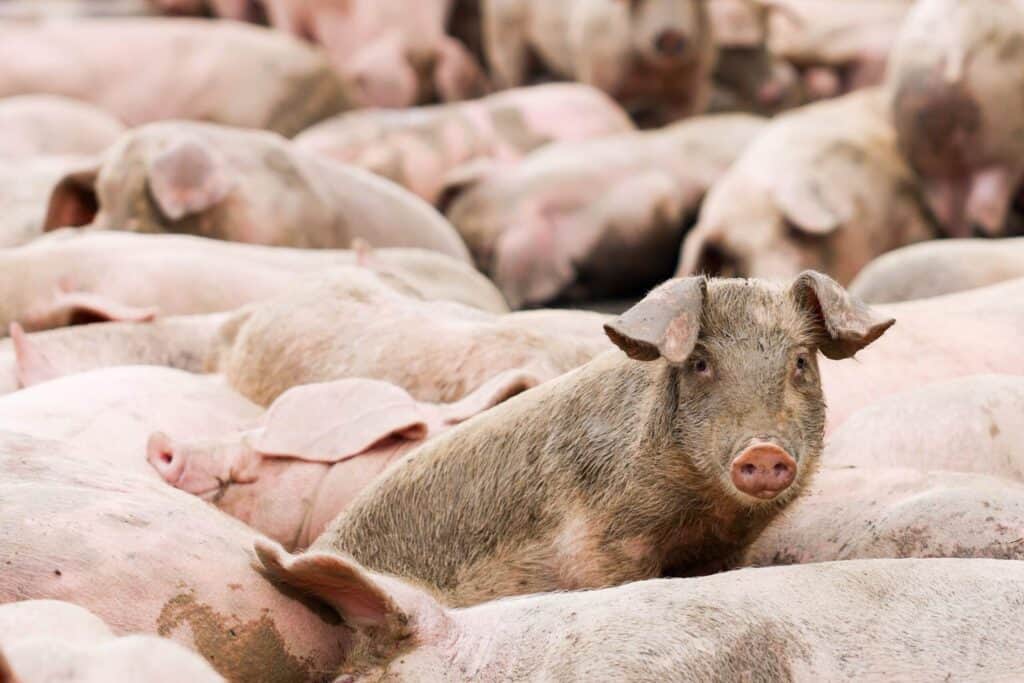
In October, Taiwan confirmed its first domestic case of African Swine Fever (ASF) at a pig farm in Taichung. The government swiftly culled the infected pigs and temporarily suspended pork slaughter operations, causing major disruptions to the industry.
TFC immediately published a “Pork Safety” explainer addressing public concerns. As debates emerged over the source of the outbreak and policies banning swill feeding, we followed up with an in-depth piece examining the challenges of managing food waste in light of the new restrictions.
November: Japanese PM’s “Taiwan Contingency” Remarks Stir Debate
Newly appointed Japanese Prime Minister Sanae Takaichi made headlines in November with her remarks in the Diet referencing a “Taiwan contingency,” prompting swift backlash from China and raising tensions in East Asia. The incident also sparked widespread discussion in Taiwan.
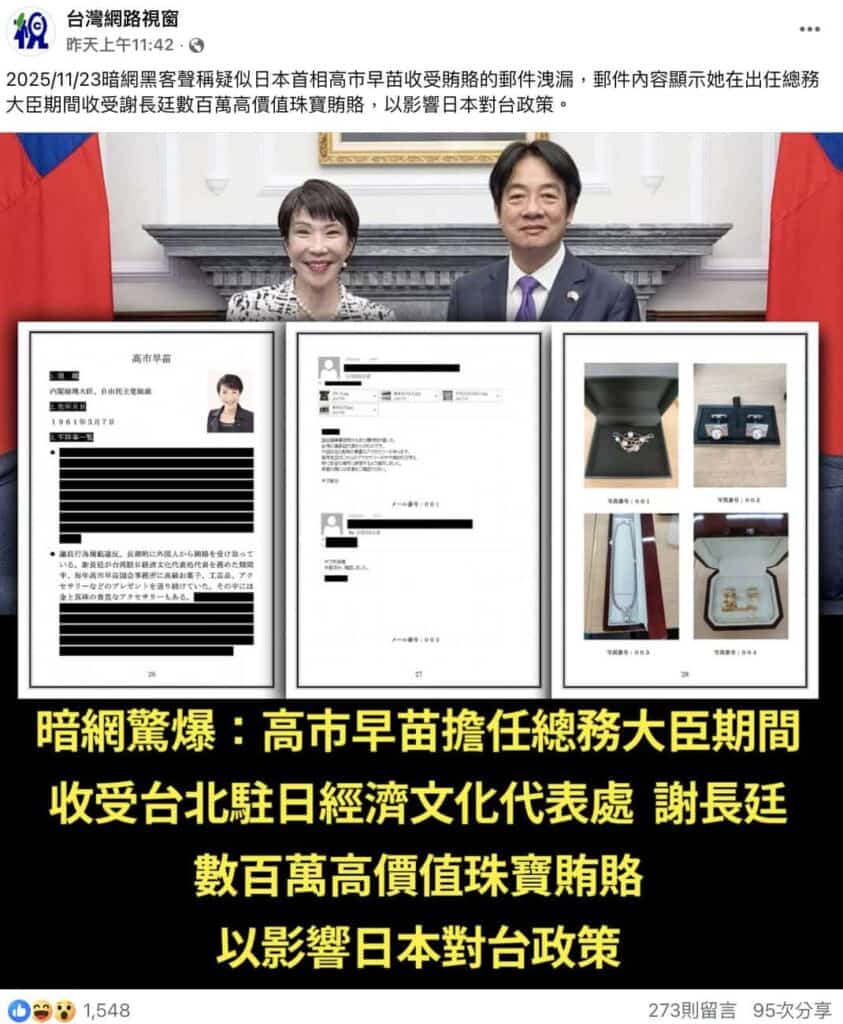
Online, misinformation spread quickly. One viral image falsely claimed Takaichi’s grandfather, Takao Takaichi, was a Japanese soldier involved in wartime atrocities in China. Another rumor, originating from a Taiwanese Facebook page citing alleged “dark web documents,” accused former Taiwanese diplomat Frank Hsieh of bribing Takaichi with jewelry. A linguistic analysis revealed the documents were written in ungrammatical “Chinese-style Japanese” and lacked authenticity. Japanese media found no trace of such allegations, and TFC concluded that the claims were baseless.
December: Taipei Stabbing Attack Sparks Wave of Conspiracy Theories
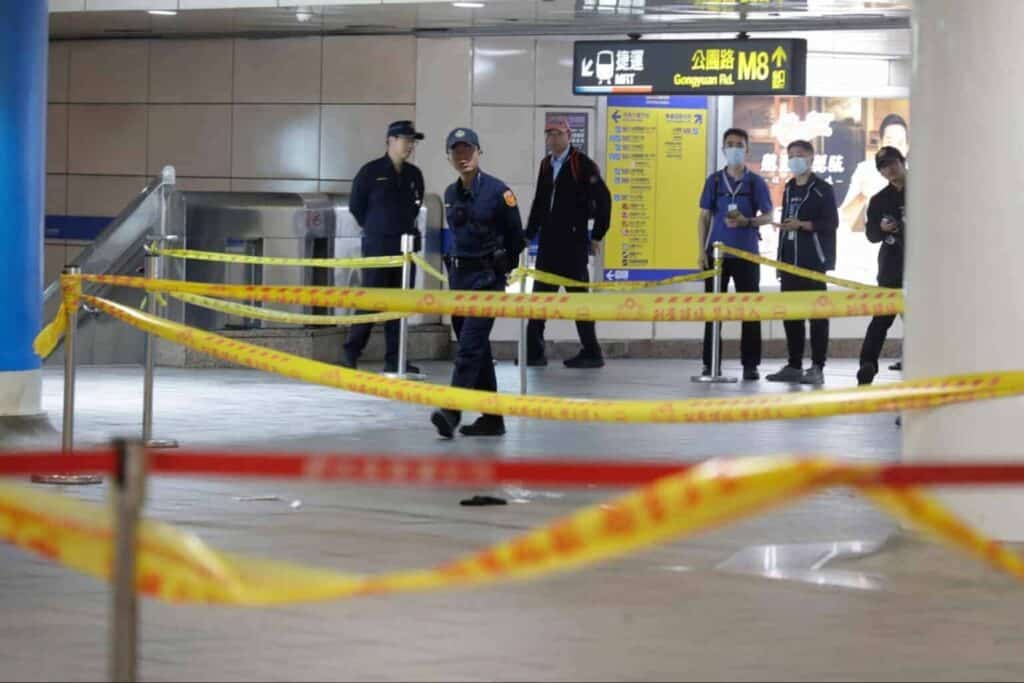
On the evening of December 19, a shocking stabbing rampage occurred in Taipei, leaving four people dead (including the suspect) and several injured. As details and footage of the attack spread rapidly online, so did misinformation.
Some posts claimed the suspect was part of a Chinese “fifth column” or had mainland Chinese parents. Others alleged that Chinese media had reported on the attacker’s suicide before it happened—citing misinterpreted timestamps to suggest foreign intelligence involvement. Some political figures blamed lax regulation of military gear, while others hinted the attack was a pretext for martial law—illustrating the deepening political divides in Taiwan.
Yet amidst the noise, many expert groups quickly stepped in to offer guidance. Mental health professionals from the Taipei/New Taipei counseling associations, emergency medicine experts, and legal psychiatrists shared practical advice on how to cope with trauma and public safety. Social media influencers also leveraged AI and visual storytelling to quickly package and spread verified information, helping the public focus on facts.
TFC published a comprehensive article the following day, compiling insights from multiple expert sources to encourage responsible discussion, minimize the risk of copycat behavior, and promote community care.